What time does stock market open?
When Does the US Stock Market Open and Close?
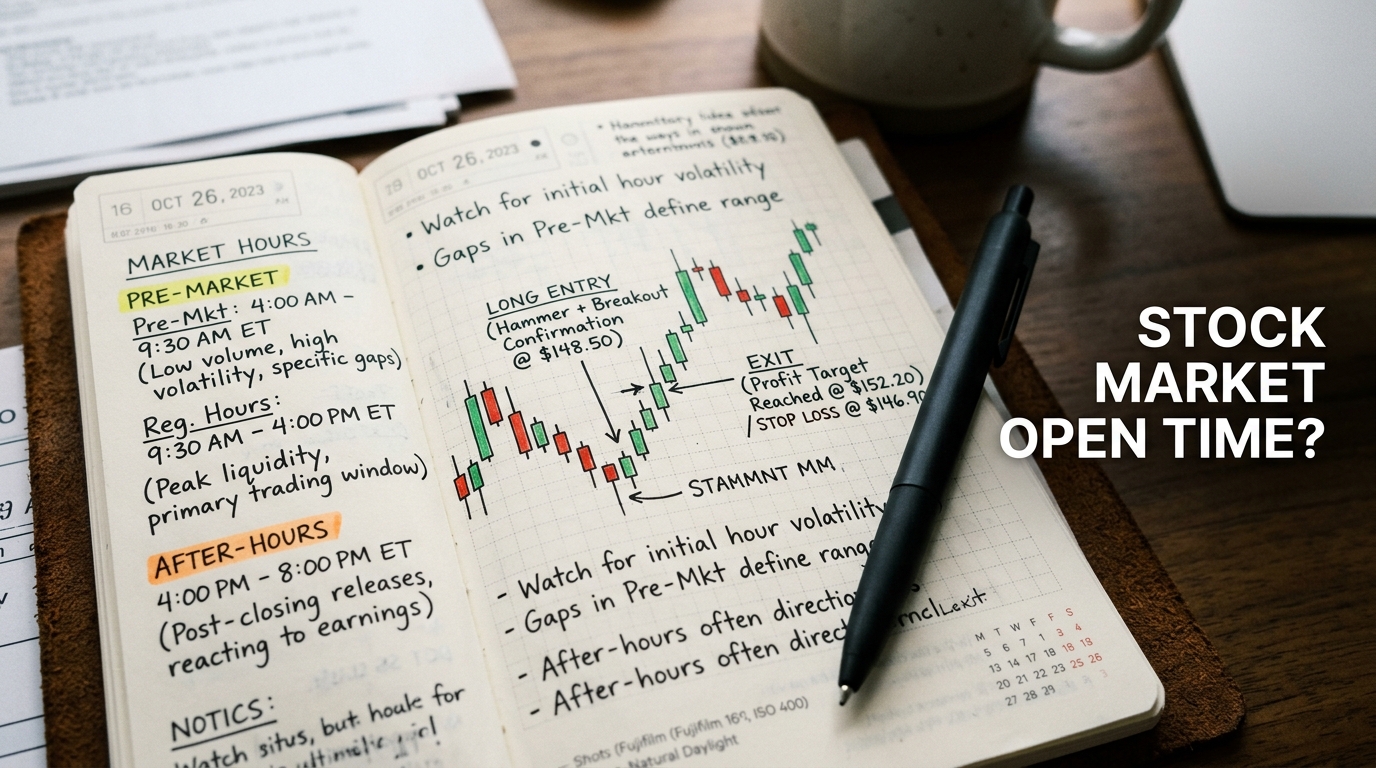
Alright, let's cut to the chase. The main US stock market, primarily referring to the New York Stock Exchange (NYSE) and NASDAQ, opens its doors for trading at 9:30 AM Eastern Time (ET) and closes at 4:00 PM ET. That's your standard trading day, Monday through Friday, barring any holidays.
For us active traders, those hours are the bread and butter. You're typically looking at the highest volume and liquidity during these times, which is exactly what we want for getting in and out of positions efficiently. Trying to trade illiquid stocks outside these hours can be a real headache, with wider spreads and choppy price action.
Pre-Market and After-Hours Trading
Now, while 9:30 AM to 4:00 PM ET is the official window, it's not the whole story. We also have pre-market and after-hours sessions. These are often where big news drops and you see some serious moves before the general public even wakes up or gets home from work.
- Pre-Market Trading: Generally runs from 4:00 AM ET to 9:30 AM ET.
- After-Hours Trading: Typically from 4:00 PM ET to 8:00 PM ET.
Keep in mind, these extended hours usually have lower liquidity and higher volatility. You'll often see larger spreads between bid and ask prices. It's not for the faint of heart, and honestly, you need to know what you're doing if you're trading during these times. I've seen plenty of traders get chopped up trying to chase a pre-market rally only for it to fade at the open.
Why Knowing Market Hours is Crucial for Traders
Understanding these timings isn't just trivia; it's fundamental to your trading strategy. Missing a key opening or closing move can mean the difference between hitting your profit target or taking an unnecessary loss.
Volatility and Opportunity
Look, the market open is often when you see the most explosive moves of the day. All that pent-up buying and selling pressure from pre-market, or overnight news, finally gets released. For day traders, this can be a goldmine of opportunity. But it's also when things can get wild, so you need a plan.
Similarly, the market close can also see increased volatility as institutions rebalance portfolios or traders try to flatten positions. It's not as wild as the open, but it's certainly more active than the mid-day doldrums.
Planning Your Trading Day
Knowing the market hours helps you structure your day. Are you a pre-market scout, looking for early signals? Or do you prefer to wait for the first 30-60 minutes after the open to let things settle? Your trading strategy should align with when you're most active and when the market presents the best opportunities for your style.
Personally, I focus heavily on the first couple of hours after the open and then typically step away, maybe coming back for the last hour or so. The mid-day can be great for range-bound strategies, but it's often slower, less volatile, and harder to find those quick moves I'm looking for.
How Traderesona Helps You Master Market Timings
Tracking your performance across different market sessions can be a real game-changer. This is where a robust trading journal like Traderesona comes in handy. You can log trades, review performance, and actually see when you're most profitable.
Here's the thing: you might *think* you're crushing it at the open, but your journal might tell a different story. Maybe you're actually more consistent an hour after the open, or perhaps your after-hours trades are bleeding you dry.
Advanced Analytics by Time of Day
With Traderesona's Pro and Premium plans, you get access to advanced analytics that break down your performance by time of day. This isn't just about your P&L; it's about seeing your win rate, average winner, and average loser for specific hourly blocks.
Imagine seeing a chart showing you have a 70% win rate between 9:30 AM and 10:30 AM, but it drops to 30% between 11:00 AM and 1:00 PM. That's actionable data! You can then adjust your strategy to focus on your profitable windows and avoid your weaker ones.
For example, let's say your data looks something like this:
This kind of insight is invaluable. You wouldn't get this level of breakdown from just looking at your broker statement. Traderesona helps you turn raw trade data into actionable insights, so you can focus on what works and cut out what doesn't.
Plus, with auto-sync broker connections (available on Pro and Premium), your trades are automatically imported, saving you time and ensuring you don't miss any data points for analysis. No more manual entry of every single trade after a hectic open!
FAQs About Stock Market Hours
What is the typical trading day for the stock market?
The typical trading day for the main US stock market (NYSE and NASDAQ) is from 9:30 AM Eastern Time (ET) to 4:00 PM ET, Monday through Friday. These are the regular market hours where the vast majority of volume and liquidity occurs. Active traders, especially day traders, tend to focus their efforts during these core hours.
Are there any exceptions to the standard stock market hours?
Yes, there are a few exceptions. The stock market closes on all federal holidays in the US, such as Christmas Day, New Year's Day, and Thanksgiving Day. Additionally, there are often early closures on certain days, like the day before Thanksgiving or Christmas Eve, where the market might close at 1:00 PM ET instead of 4:00 PM ET. It's always a good idea to check the exchange's holiday schedule, or your broker's announcements, especially if you plan to hold positions into those periods.
What is pre-market trading, and what time does it open?
Pre-market trading is a session that occurs before the official market open. It generally begins at 4:00 AM ET and runs until 9:30 AM ET. During this time, traders can place orders and execute trades, often reacting to overnight news or earnings reports released before the market officially opens. However, liquidity is typically lower, and spreads can be wider, making it a more volatile and risky period for trading.
What are after-hours trading times?
After-hours trading occurs immediately after the official market close. It typically runs from 4:00 PM ET to 8:00 PM ET. Similar to pre-market, after-hours trading allows participants to react to news released post-market close, like earnings announcements. Like pre-market, this session is characterized by lower liquidity and potentially higher volatility compared to regular market hours.
Do different assets have different trading hours?
Absolutely. While stocks have the 9:30 AM - 4:00 PM ET window, other asset classes like futures and forex operate on vastly different schedules. Forex markets, for example, trade 24 hours a day, five days a week, moving through different global sessions. Futures often trade nearly 24/5 as well, with specific sessions depending on the contract. Even options, which trade on underlying stocks, typically follow the stock market's regular and extended hours. If you're trading multiple assets, Traderesona lets you track stocks, options, futures, and forex all in one journal, so you can keep everything organized regardless of their unique trading schedules.
Summing It Up
Knowing exactly when the stock market opens and closes is non-negotiable for active traders. Those core 9:30 AM to 4:00 PM ET hours are your prime time, with pre-market and after-hours offering different, often riskier, opportunities. By understanding how market timings impact volatility and liquidity, you can fine-tune your strategy. And to truly master your timing, you need a way to track and analyze your performance by session. Tools like Traderesona provide the detailed analytics to help you identify your best trading windows and refine your edge.